In 2026, the digital world is no longer flat. We are witnessing the birth of Sensory AI Design, a trend where visuals are crafted to trigger a tactile response in the viewer. It’s not just about what you see; it’s about what you “feel.” From “squishy” 3D typography to “puffy” iridescent fabrics, digital textures are becoming the new language of creative expression.
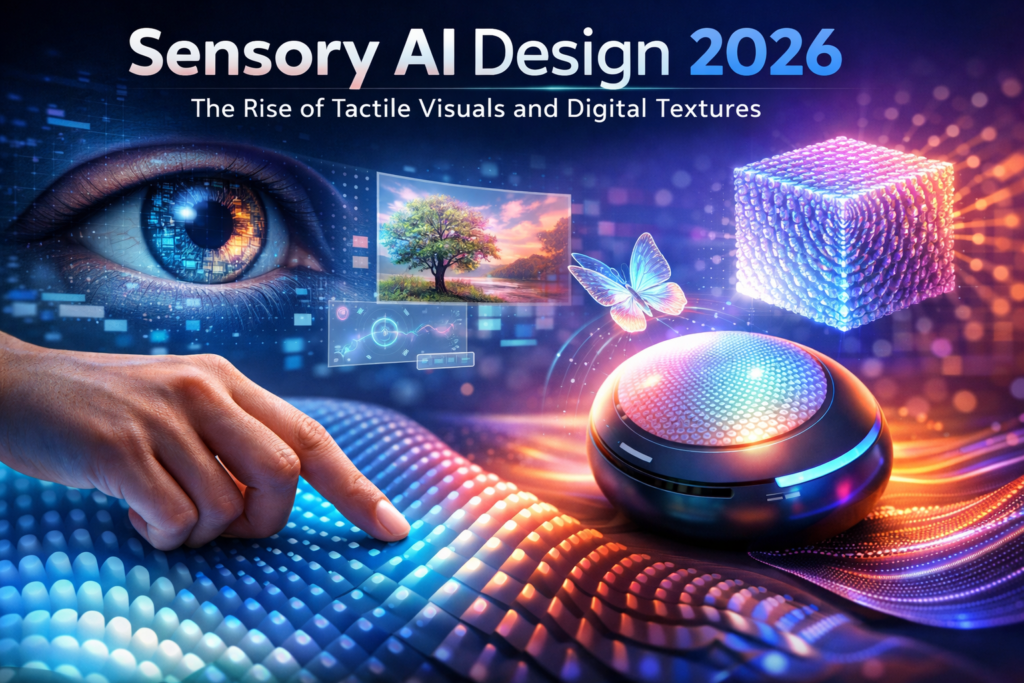
Table of Contents
What is Sensory AI Design?
Sensory AI Design refers to the use of generative tools to create hyper-realistic textures that mimic real-world sensations. In 2026, this has moved beyond simple 3D rendering. AI models now understand the physics of softness, the refraction of liquid glass, and the “crunch” of crystalline structures.
As we’ve seen in our Ultimate Guide to AI Video Generation 2026, the ability to render these textures in motion is what separates professional creators from amateurs.
Top Textures Dominating 2026
If you want your content to go viral on platforms like Pinterest, you need to master these three “sensory” styles:
- The “Puffy” Aesthetic: Inspired by high-end puffer jackets and inflatable art. It’s soft, voluminous, and comforting.
- Iridescent Liquidity: Textures that look like melted chrome or oil on water. These evoke a sense of futuristic luxury.
- Bio-Organic Textures: Visuals that mimic moss, mycelium, or skin-like surfaces, bridging the gap between nature and technology.
| Texture Style | Visual Characteristic | Recommended AI Tool | Sensory Feeling |
| Puffy / Inflatable | Soft, voluminous, matte or satin | Midjourney v6.5 | Comfort & Softness |
| Iridescent Liquid | Multi-color shimmer, fluid motion | Runway Gen-3 | Luxury & Fluidity |
| Crystalline / Glass | High refraction, sharp edges | Adobe Firefly | Clarity & Precision |
| Bio-Organic | Moss-like, fuzzy, natural fibers | Luma Genie | Nature & Growth |
Essential Tools for Tactile Visuals
To achieve these results, creators are moving between high-end prompt engineering and specialized neural filters:
- Midjourney v6.5 (Texture Mode): Excellent for “Macro” shots that highlight every fiber and drop of moisture.
- Adobe Firefly (3D Structure): Best for applying sensory textures to existing brand logos and products.
- Runway Gen-3: Crucial for making these textures react to touch or wind in video format.
Conclusion: Designing for the Senses
The goal of Sensory AI Design is to create a connection. In a world saturated with generic AI art, the visuals that make a viewer want to reach out and touch the screen are the ones that will win. 2026 is the year of the tactile digital revolution.