In 2026, the digital and natural worlds are no longer separate. We are entering the era of Biophilic AI Design, a movement that uses artificial intelligence to create living, breathing spaces that integrate nature into every corner of our homes and offices. From moss-covered interior walls to buildings that mimic the fractal patterns of trees, AI is redefining how we inhabit the Earth.
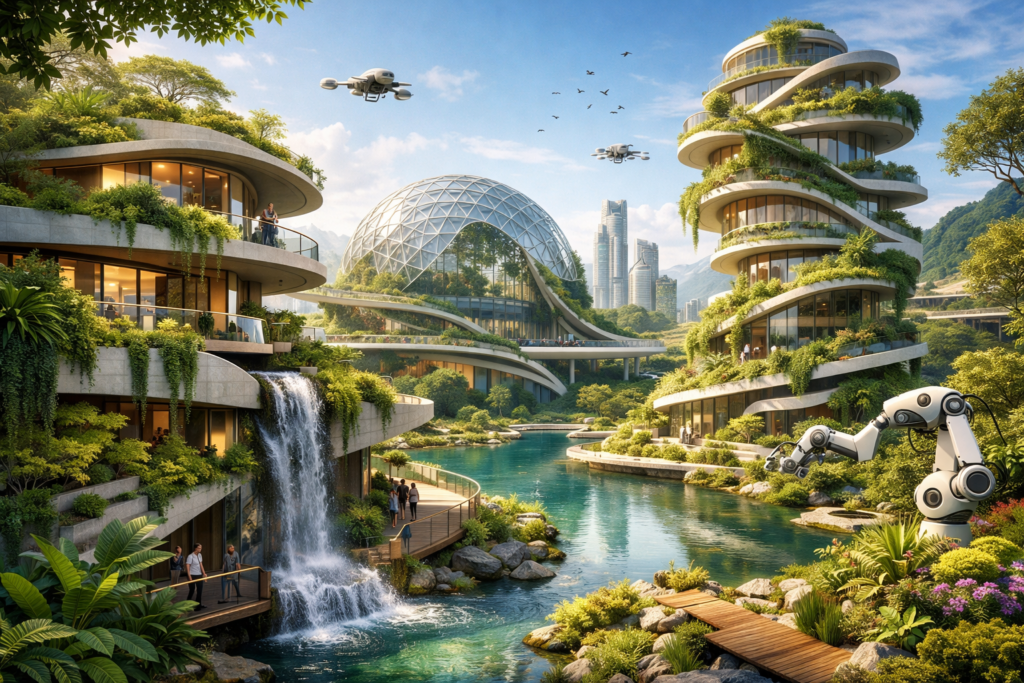
Table of Contents
What is Biophilic AI Design?
It is more than just “adding plants” to a room. Biophilic AI uses generative algorithms to calculate the optimal sunlight, airflow, and organic shapes that promote human well-being. Following the principles of Sensory AI Design, these spaces are designed to be felt, not just seen.
3 Core Trends in 2026 Green Design
- Fungal Architecture: AI-generated concepts using mycelium-based structures that look both alien and deeply organic.
- Liquid Flora: Integrating hydroponic systems into the very walls of a digital room, rendered with hyper-realistic water physics.
- Adaptive Natural Lighting: Using AI to simulate how a forest canopy filters light (komorebi) inside a modern apartment.
Best Tools for AI Architects
- Midjourney v6.5 (Architectural Mode): The “gold standard” for conceptualizing organic structures and lush greenery.
- LookX AI: A specialized tool for architects that understands structural integrity while applying biophilic textures.
- Adobe Firefly (Spatial Match): Excellent for taking a photo of a boring room and transforming it into a biophilic sanctuary.
| Concept | Key Element | Emotional Response | Recommended Tool |
| Living Walls | Moss & Vertical Ferns | Calm & Serenity | Midjourney |
| Fractal Roofs | Tree canopy patterns | Awe & Connection | LookX AI |
| Hydraulic Glass | Running water inside glass | Focus & Flow | Runway Gen-3 |