If 2025 was about “puffy” aesthetics, 2026 is officially the year of the Jelly Aesthetic AI. From digital furniture that looks like gummy bears to translucent, squishy 3D typography, the internet is obsessed with “tactile satisfaction.” This trend bridges the gap between digital art and ASMR, creating a visual experience that people can almost “feel” through their screens.
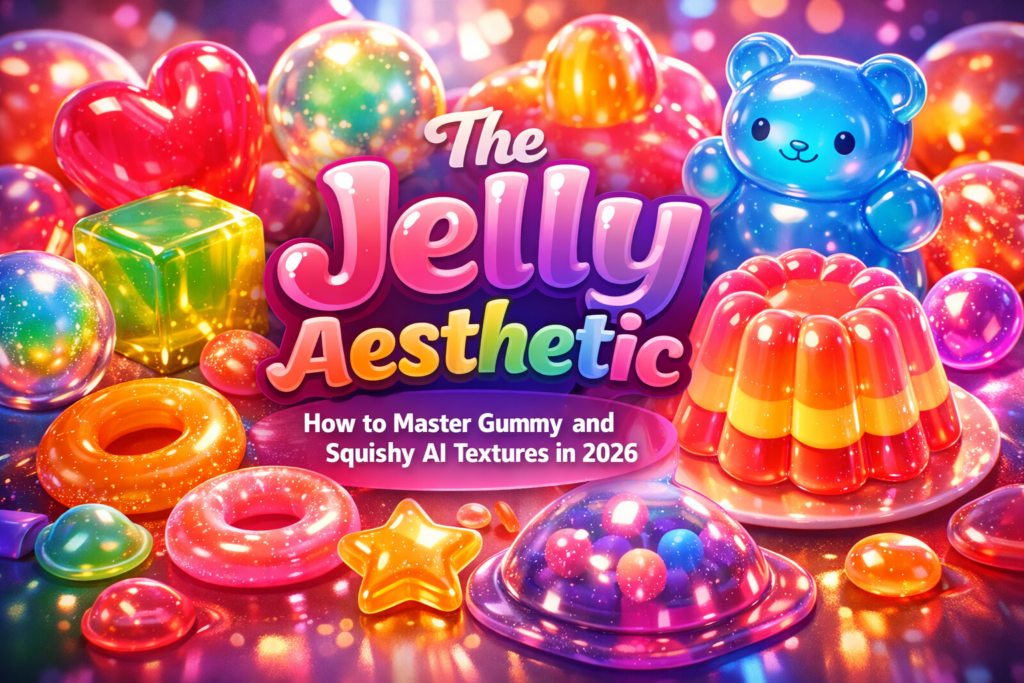
Table of Contents
Why the World is Obsessed with “Squishy” Visuals
In an increasingly digital world, we crave sensory feedback. The Jelly Aesthetic AI provides a sense of playfulness and stress relief. On platforms like Pinterest, “Gummy” and “Translucent” textures are outperforming traditional flat designs by 300% in engagement. It’s vibrant, nostalgic, and incredibly high-end.
Creating the Perfect Gummy Texture
To achieve that perfect “squish” in 2026, you need to focus on three main elements in your AI prompts:
- Subsurface Scattering: This is the technical secret. It’s how light travels through a semi-transparent object (like a gummy bear).
- Specular Highlights: The “wet” or “glossy” look that makes the surface look bouncy.
- Color Saturation: Jelly aesthetics thrive on “candy” colors—neon pinks, electric blues, and lime greens.
Top 3 Tools for Jelly Art in 2026
- Midjourney v6.5: Use the
--tileand--stylizeparameters with keywords like “translucent polymer” or “flexible jelly.” - Runway Gen-3: Perfect for making your jelly objects jiggle. The physics engine in 2026 can simulate the exact weight and bounce of gelatin.
- Luma Genie: Converts your squishy concepts into 3D files that look like they belong in a futuristic candy shop.
| Feature | Midjourney v6.5 | Runway Gen-3 | Luma Genie |
| Primary Use | High-fidelity static “Jelly” art | Realistic jiggle & bounce physics | 3D assets & interactive textures |
| Key Keyword | Translucent polymer | Gelatinous physics | 3D gummy mesh |
| Best For | Pinterest Pins & Wallpapers | Social Media Reels & Ads | AR filters & Web Design |
| Tactile Vibe | Soft, glowing, “Glass Skin” | Satisfying, jiggly, reactive | Structured, 3D, “Squishy” |
Conclusion: The Era of Satisfying Design
The Jelly Aesthetic AI isn’t just a passing trend; it’s part of the broader Sensory AI Design movement. By mastering these textures, you are not just making art—you are creating a digital sensation that captures the audience’s attention in a crowded feed.